Tutorials
Hands-on tutorials for transition network analysis, sequence analytics, and learning analytics methods in R.
These tutorials provide step-by-step, reproducible guides for applying advanced analytical methods in education research. Each tutorial uses real data, includes full R code, and is designed to be accessible to researchers and practitioners. They accompany the Learning Analytics Methods and Tutorials book and the tna R package.
Transition Network Analysis (TNA)

An Updated Comprehensive Tutorial on Transition Network Analysis
The definitive guide to TNA — from building transition matrices to network visualization, centrality analysis, community detection, and bootstrapped significance testing. This tutorial walks through every step of modeling how learners move between behavioral states over time, using the tna R package with real educational data.
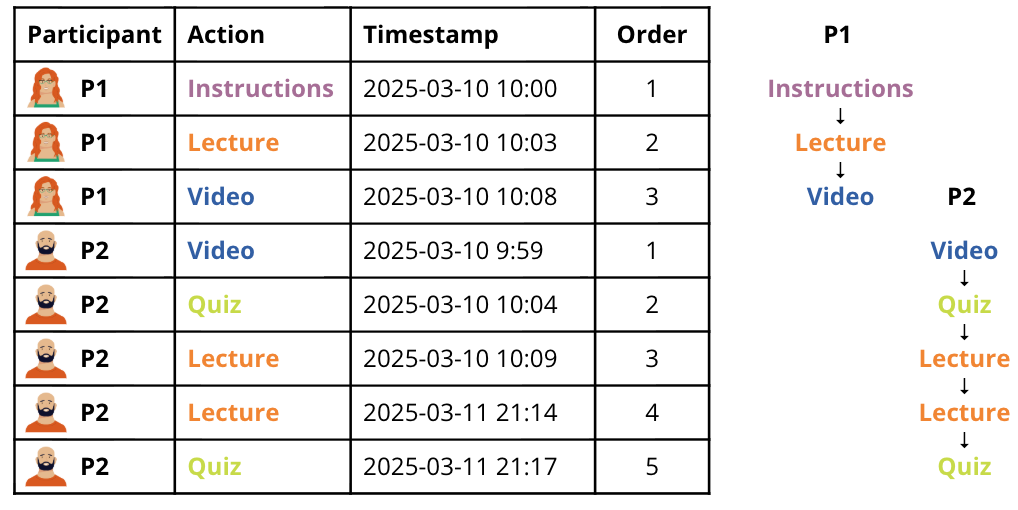
TNA Data Preparation: A Comprehensive Guide to prepare_data()
Before running any TNA analysis, raw event logs need to be reshaped into sequences. This companion tutorial covers the full data preparation pipeline — from importing raw timestamped data to defining states, handling missing values, setting sequence boundaries, and producing the structured input that tna() expects.
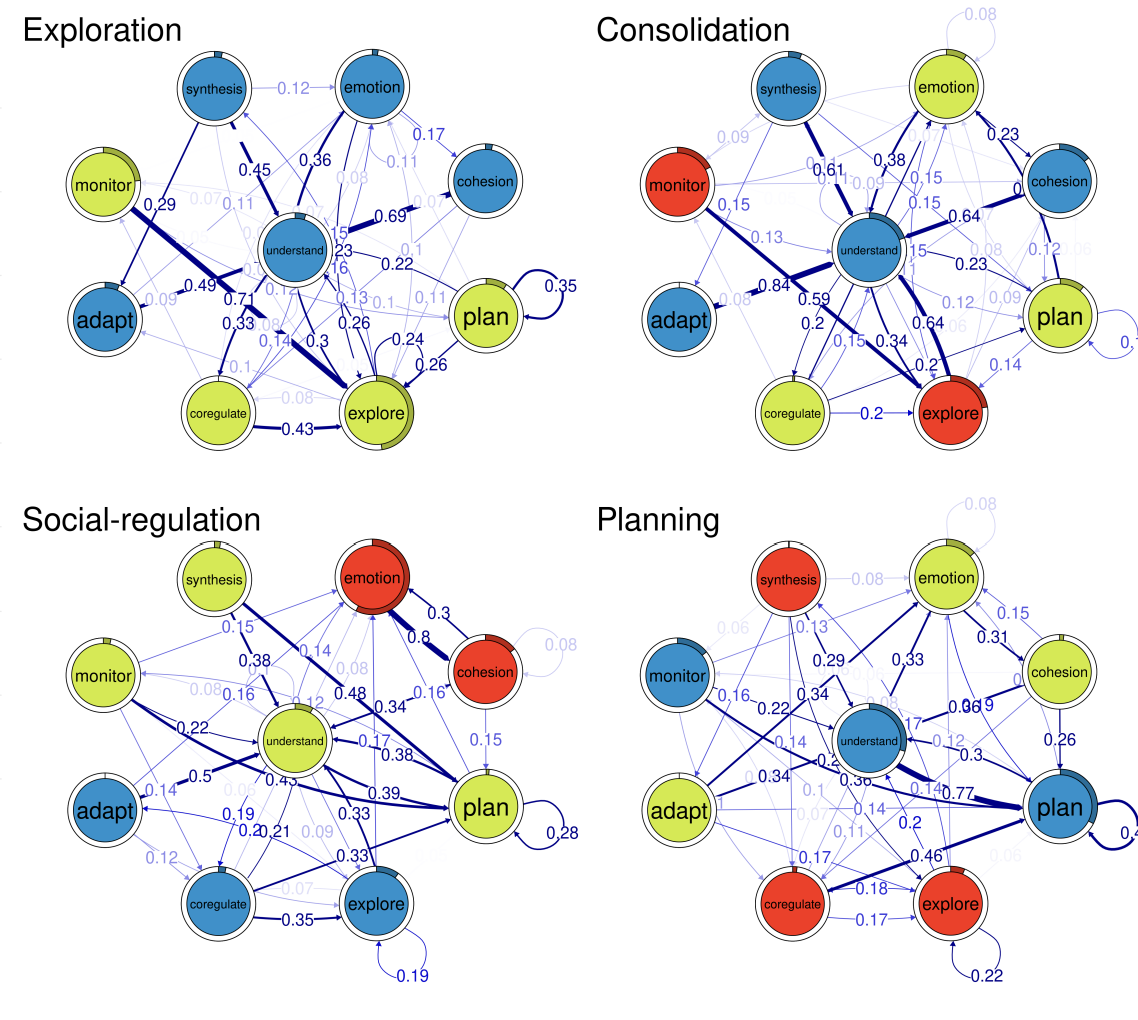
TNA Clustering: Discovering and Analysis of Clusters
Learners do not all follow the same behavioral sequences. This tutorial demonstrates data-driven clustering of temporal sequences to identify distinct groups of learners with similar process patterns. It covers dissimilarity computation, optimal cluster selection, cluster validation, and how to build and compare separate TNA models for each discovered cluster.
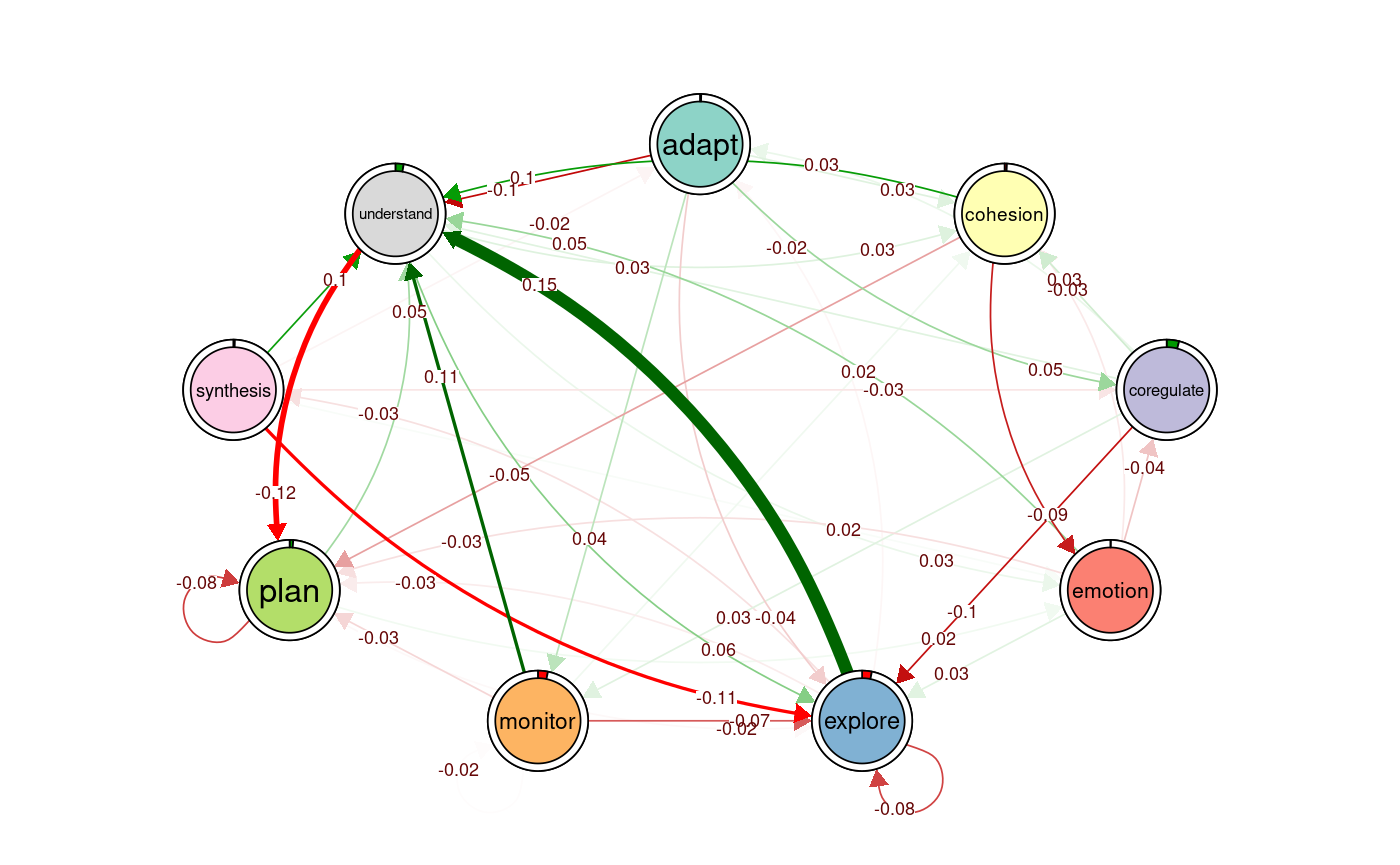
TNA Group Analysis: Analysis and Comparison of Groups
When learners belong to pre-defined groups — high vs. low achievers, different courses, experimental conditions — you need rigorous methods to compare their behavioral processes. This tutorial covers group-level TNA construction, permutation testing for significant differences between transition networks, bootstrapped confidence intervals, and visual comparison of group networks.
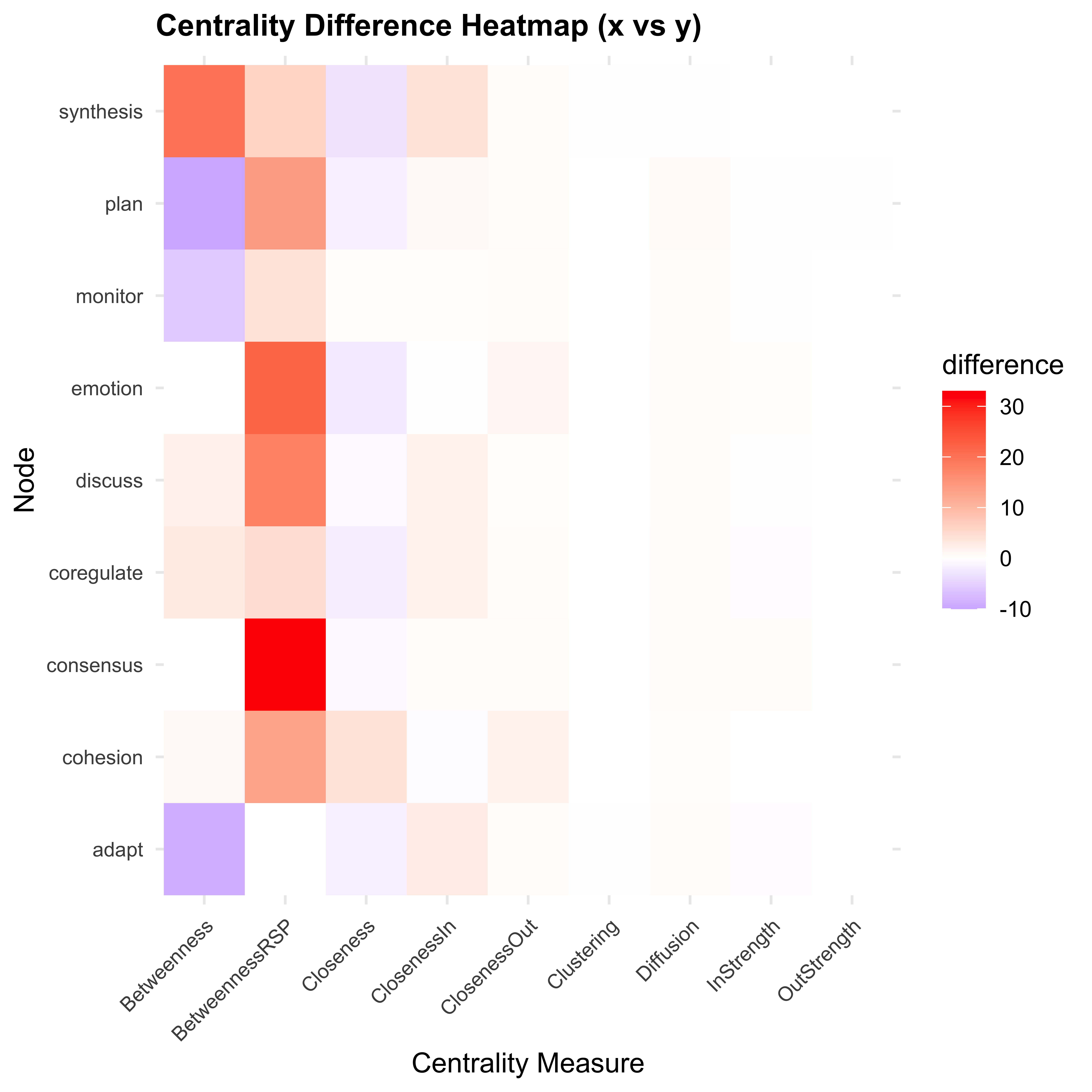
TNA Model Comparison: A Comprehensive Guide to Network Comparison
Comparing transition networks across conditions, time points, or populations requires more than visual inspection. This tutorial presents a methodologically rigorous framework for model comparison, including edge-level difference testing, network-level similarity metrics, heatmap visualizations of transition differences, and statistical tests that account for the dependency structure of network data.
Sequence & Process Analytics
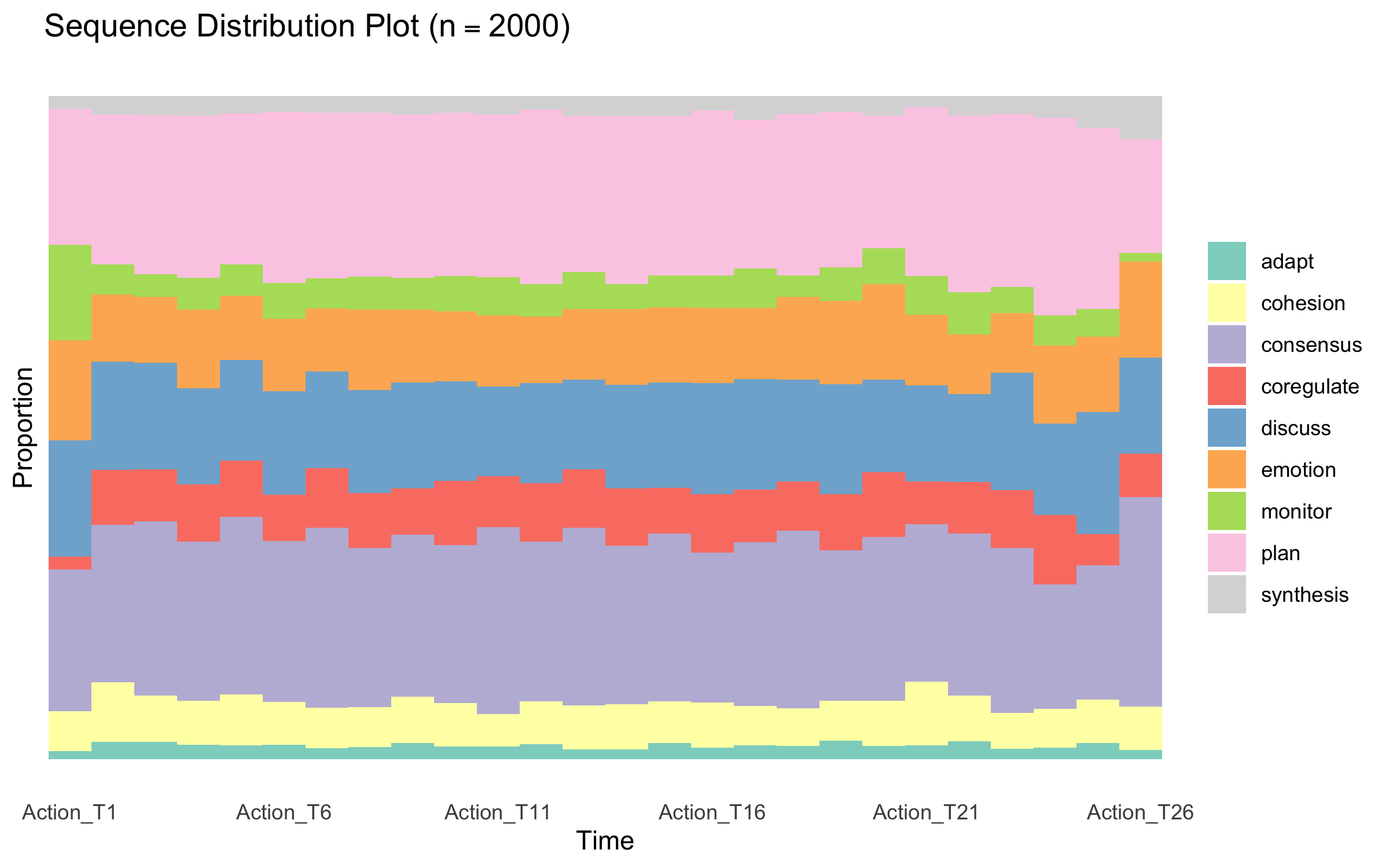
Sequence Patterns, Outcomes, and Indices with codyna
Beyond transition networks, behavioral sequences contain rich information in their structure — entropy, complexity, turbulence, and recurrence. This tutorial introduces the codyna R package for computing sequence indices, detecting sequential patterns, linking sequence properties to learning outcomes, and visualizing the dynamics of behavior over time using real educational data.